
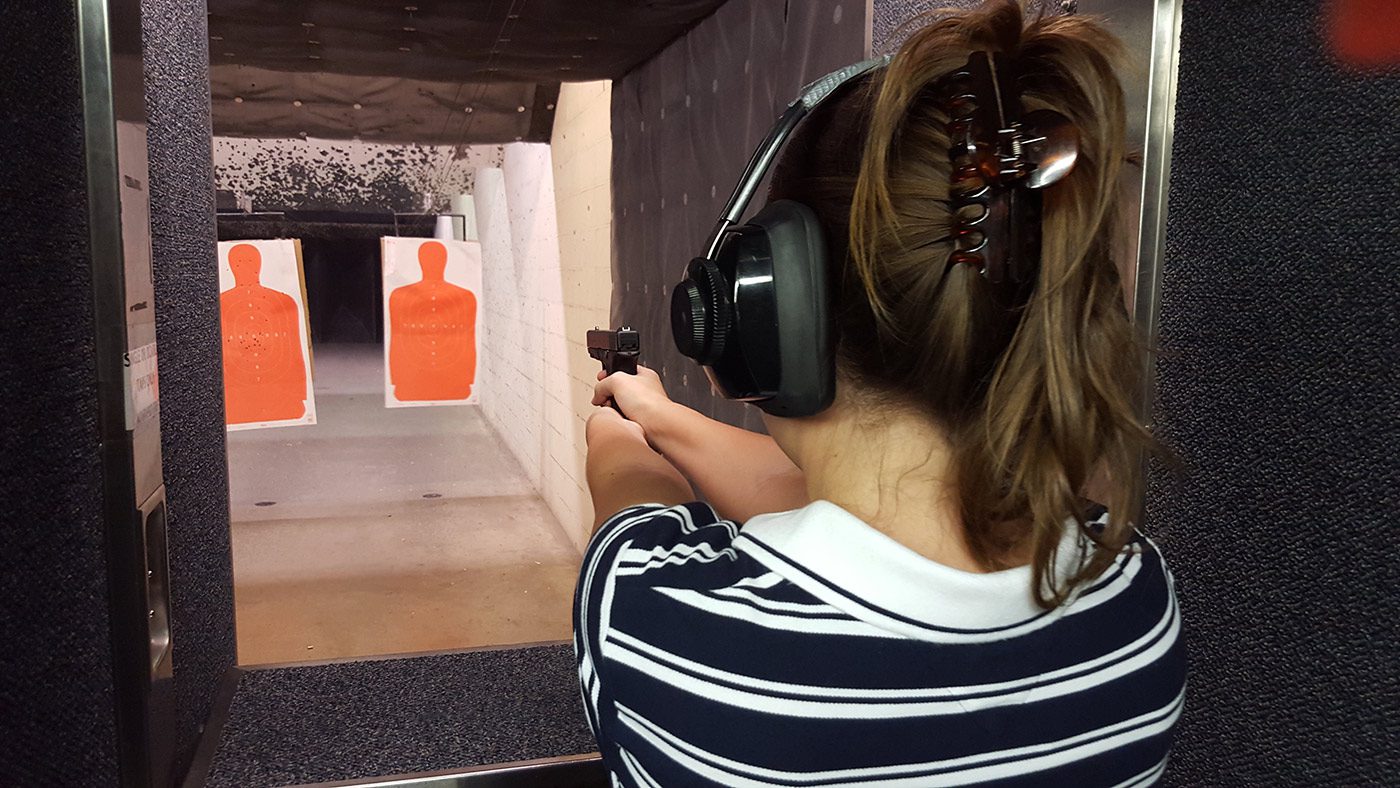
A fun day of target shooting can be quickly ruined by someone who is unaware or simply inconsiderate of others at the range. And while there are a number of rules to proper range etiquette, the most important is range safety. To ensure your trip to the range is fun, safe and productive make sure you and any of the shooter’s in your group follow these cardinal rules.
What You Should Never Do at the Range
Without question, the most important rule of gun range etiquette is safety. That means any behavior that endangers yourself or others is simply unacceptable. Unfortunately, some shooters, mostly new ones, seem to minimize the importance of safety at a gun range because it feels like a controlled environment. But accidents can happen anywhere, and the range is no exception. But they don’t have to happen.
One of the most common safety mistakes new shooters make is not paying attention to where they’re pointing their guns. The adrenaline rush that comes after pulling the trigger can take a while to get used to, and when you’ve just shot a gun for the first time, you can easily get lost in the excitement. So, make sure you always follow basic gun safety and always keep your firearms pointed in a safe direction. Most ranges require all guns to be unloaded and in a case when not at the firing lane as an added safety measure. That means not carrying a gun behind the shooting line or working on it at a work station while others are on the line.
Range Safety Rules
As an experienced gun owner introducing new or inexperienced shooters to the range, it is incumbent that we all stress the following safety tips on each and every outing. They are:
- Treat every gun as if it is always loaded.
- Never let the muzzle cover anything which you are not willing to destroy.
- Keep your finger off the trigger until your sights are on the target.
- Always be sure of your target and behind it.
Let’s talk about what these rules mean and how to best apply them at the range or any time you or someone you are with are handling a firearm.
Rule #1
As originally articulated by the late Colonel Jeff Cooper and taught at his famed Gunsite Academy in Paulden, Arizona, the first rule of safe gun handling originally stated, “all guns are always loaded.” Of course they aren’t “always” loaded, but what this means is that you should treat all guns as if they are always loaded, thus the current wording of the rule. Even if you checked the gun to ensure it doesn’t have a round in the chamber, you treat the gun as if it does, keeping it pointed in a safe direction, fingers off the trigger, etc. This is so you never get lazy or forgetful and make a mistake.
Rule #2
Another way of phrasing the second rule of gun safety is to never point the gun at anything you don’t want killed or destroyed. The muzzle of your gun must always be aimed in a safe direction. What is a safe direction? It’s one that would end without injury or destruction if the gun fired.
Rule #3
Your finger should not touch the trigger of your gun until you are on target. Contact with the trigger when you are not on target could result in a negligent discharge. The trigger is off limits until your gun is on target, whether it’s paper, steel or a game animal. At all other times, if the gun is in your hands, your trigger finger should be indexed high on the frame of the gun.
Rule #4
When it comes to knowing your target, there are more details to consider. Not only must you know exactly what and where your target is, but you have to be aware of what is between you and the target, what is around it and what is behind it. Paper targets on a range rest in front of a berm for a reason—so you have a safe backstop—and when you’re out hunting, you must know what lies beyond the animal you want to shoot. This also applies to instances of self-defense. You are responsible for every bullet that leaves your gun, so you need to pay attention to what is near and beyond your target at all times, even during high-stress situations.
Even experienced shooters need to stay mindful of these rules at all times, because safe habits are what keep every trip to the range safe and enjoyable.


Leave A Comment